
Google Ads can help you get more visibility and, implicitly, more sales. Here are 20 practical strategies for eCommerce!
You can have extraordinary results even if the business was recently launched. However, in order to get to this point, you will need to use only well-thought-out and industry-specific strategies.For example, e-commerce businesses will focus on strategies aimed at selling products. On the other hand, a service provider will certainly have to approach another specific tactic. In this article we will present some effective strategies that you can implement.
Establish the KPIs suitable for the business from the very beginning.
Depending on these indicators, you will be able to know whether the online promotion effort is giving the desired results or not. Here are some of the KPIs you can include in your analysis: click-through rate, keyword performance, cost per acquisition, quality score, and cost per click. For optimal analysis, choose at least two KPIs!
Start your campaign strategy with a goal in mind.
What do you want to achieve from the promotion: more sales, more visibility, more interaction from potential customers? Depending on these answers, you will know how to determine the budget invested in promoting on Google Ads.

In the case of Search Ads campaigns, establish a keyword strategy.
In CPC campaigns, keywords are extremely important! Their cost per click will be established depending on the terms included and the amount you will opt for. By choosing your keywords wisely, you will be able to make the difference between a successful campaign and a failed one.
Analyze the competition according to the keywords used and the message conveyed.
Analyzing the competition, you will be able to know the way in which you will design the PPC strategy. There are many online tools for analyzing competition campaigns. Opt for one of these and establish the strengths of the competition. The more you learn about your business’s market, the better your chances of success.
Use relevant landing pages for the intended campaigns.
When setting up landing pages, take into account several aspects. A well-designed landing page will result in lower costs, while one with errors or that is not relevant to the chosen target audience will result in higher costs.

Set a specific budget and maximum cost per click.
Set a daily budget that corresponds to the total budget set. There is a possibility that the budget will not be completely exhausted in a day if the settings have been made in such a way. Also set a maximum cost per click that you would be willing to pay after a single click by the potential customer. If you are not sure about the manual ways of setting the budget, you can opt for the automatic functionality.
Opt for a proper call-to-action!
Ask yourself the following question: how can I convince the potential customer to access the ad? The answer can come in many forms, from free to discount shipping.
Determine the locations where the promotion will take place.
Through Google ads, you will be able to target ads based on certain regions in a country, a certain distance around a location, or even an entire country. Use the information displayed in Google Analytics before setting geotargeting.

Choose a variety of keywords, the more and relevant, the more effective the campaign will be!
There are four ways you can use keywords: broad match keywords, modified broad match keywords, phrase match and exact match. Read this list to learn more about each type of keyword.
Opt for shopping ads!
If your business is e-commerce, don’t hesitate to use these types of campaigns! Through shopping ads, the potential customer will be able to see more details about the product (images, title, price and ratings), without accessing the destination page.
Group ad groups by product.
By opting for a good organization of ad groups, you will be able to work much more efficiently and you will be able to track the results in a well-structured way. For example, an online store that sells women’s clothing can group ads as follows: T-shirts (first group), pants (second group), skirts (third group), and dresses (ad group 4).|

Bid a higher value for products that have a high price!
Bidding a higher value strictly on the more expensive products is a strategy used by e-commerce giants. This strategy is recommended to be used especially in “high intent” audiences. Magic happens when users show a strong interest in buying and the right products appear at the right time.
Highlight special offers!
Potential customers love discounts! Offering the opportunity to save, they will not hesitate to purchase the discounted products. Include in the text of the ad or in its extensions the latest discounts, offers or reductions.
Optimize ads according to seasonal trends.
Seasonality can be a real problem if you don’t take it into account when making ads! No one would like to receive ads for winter jackets in the middle of summer! If your business sells certain products that will become really popular at certain times, you will need to strategize ahead of time!

Create ads that appeal.
By choosing the right words and the unique features of your business, potential customers will definitely consider your ads! Pay special attention to titles, as they are the first contact with potential customers.
Include negative keywords in your strategy for added relevance!
In most cases, you’ll want to include negative keywords as well. Through them, you will ensure that you reduce the possibility of displaying those ads to people who are not directly interested in the product.
Don’t forget to use extensions!
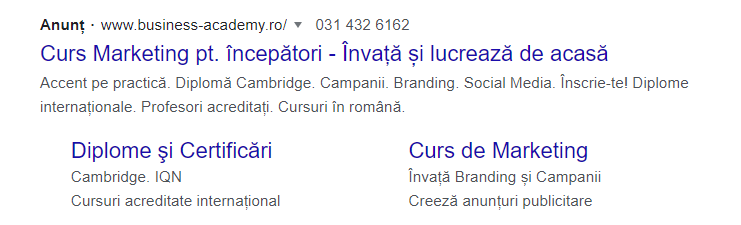
With the help of extensions, you can add additional information that can attract the potential consumer. These include: call buttons, location tags, additional text with unique features, additional links, etc.
Test, test and test again.
See what’s working and which ads or ad groups aren’t getting the results you want! Take timely measures and test various options to get the desired results!
Take into account the recommendations provided by Google.
Google Ads frequently offers suggestions on how to improve your ads. Consider each piece of advice, as it could be the recommendation your campaign needs to perform at its best.
It measures the indicators with a certain frequency.
Google Ads is a tool that allows us to monitor results in real time. To achieve the desired performance, you will need to take a look at the KPIs set out above. In case of unfavorable results, you will have to test other options.
Final thoughts
In addition to these 20 tips, there are certainly hundreds or maybe even thousands more. Don’t forget that regardless of the settings made, at the other end of the screen there are people like me and you! Always remember the most important factor: the man! Make sure that the potential customer will have the best experience, both during and after the purchase, and the results will not be long in coming!